Clinical details
The science behind common PT treatments
Physical therapy combines examination, movement analysis, therapeutic exercise, manual techniques, patient education, and progressive loading. The exact mix changes with each diagnosis, stage of healing, and patient goal.
Post-surgical rehabilitation
Joint replacement, rotator cuff repair, and orthopedic procedures
Postoperative rehabilitation is built around tissue healing, surgical precautions, swelling control, pain modulation, and the gradual restoration of mobility. Early care often emphasizes safe transfers, gait training, gentle range of motion, and protection of repaired tissue. Later phases progress toward strength, balance, endurance, and task-specific function.
Clinical rationale
After procedures such as knee, hip, or shoulder replacement, the body needs controlled movement to restore joint motion and muscle activation while avoiding excessive stress on healing tissues.
Common PT interventions
- Surgeon protocol review and safe exercise progression.
- Range-of-motion, strengthening, walking, stair, and balance training.
- Functional retraining for transfers, household tasks, work, and recreation.
Spine and pain care
Back pain, neck pain, headaches, and sciatica-type symptoms
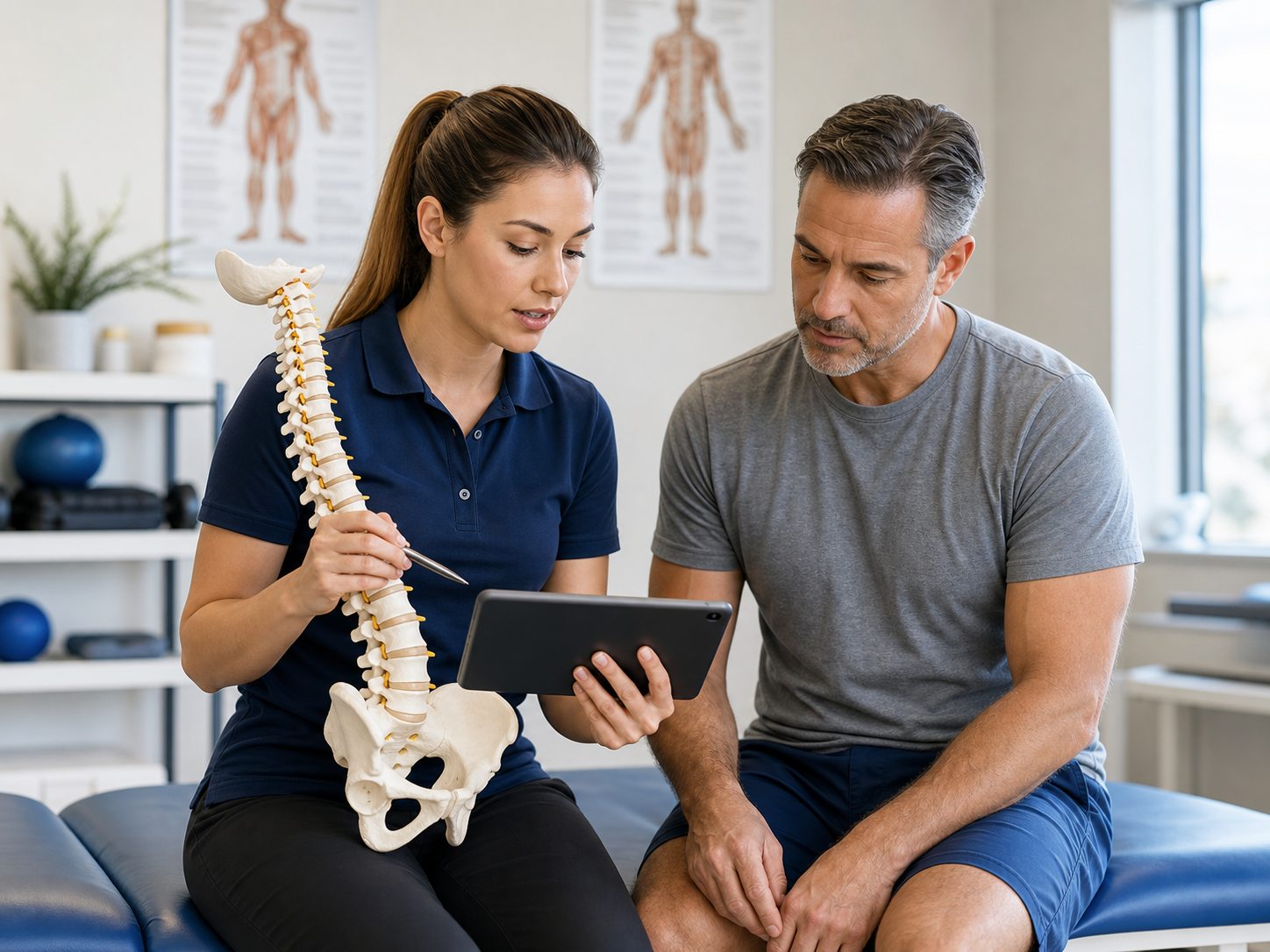
Spine-related physical therapy starts with a movement-system exam: symptom behavior, range of motion, nerve sensitivity, strength, endurance, posture tolerance, and activities that aggravate or relieve symptoms. The goal is not simply to chase pain, but to improve movement capacity and reduce the likelihood that symptoms control daily life.
Clinical rationale
Pain can be influenced by tissue loading, joint mobility, nerve irritability, muscular endurance, sleep, stress, and activity pacing. Education and graded activity help patients move with less fear while rebuilding tolerance.
Common PT interventions
- Therapeutic exercise for trunk, hip, shoulder blade, and neck control.
- Manual therapy or soft-tissue techniques when mobility limits function.
- Home strategies for lifting, sitting, sleeping, walking, and flare-up management.
Orthopedic and sports rehabilitation
Ankle sprains, knee pain, shoulder injuries, and sports recovery
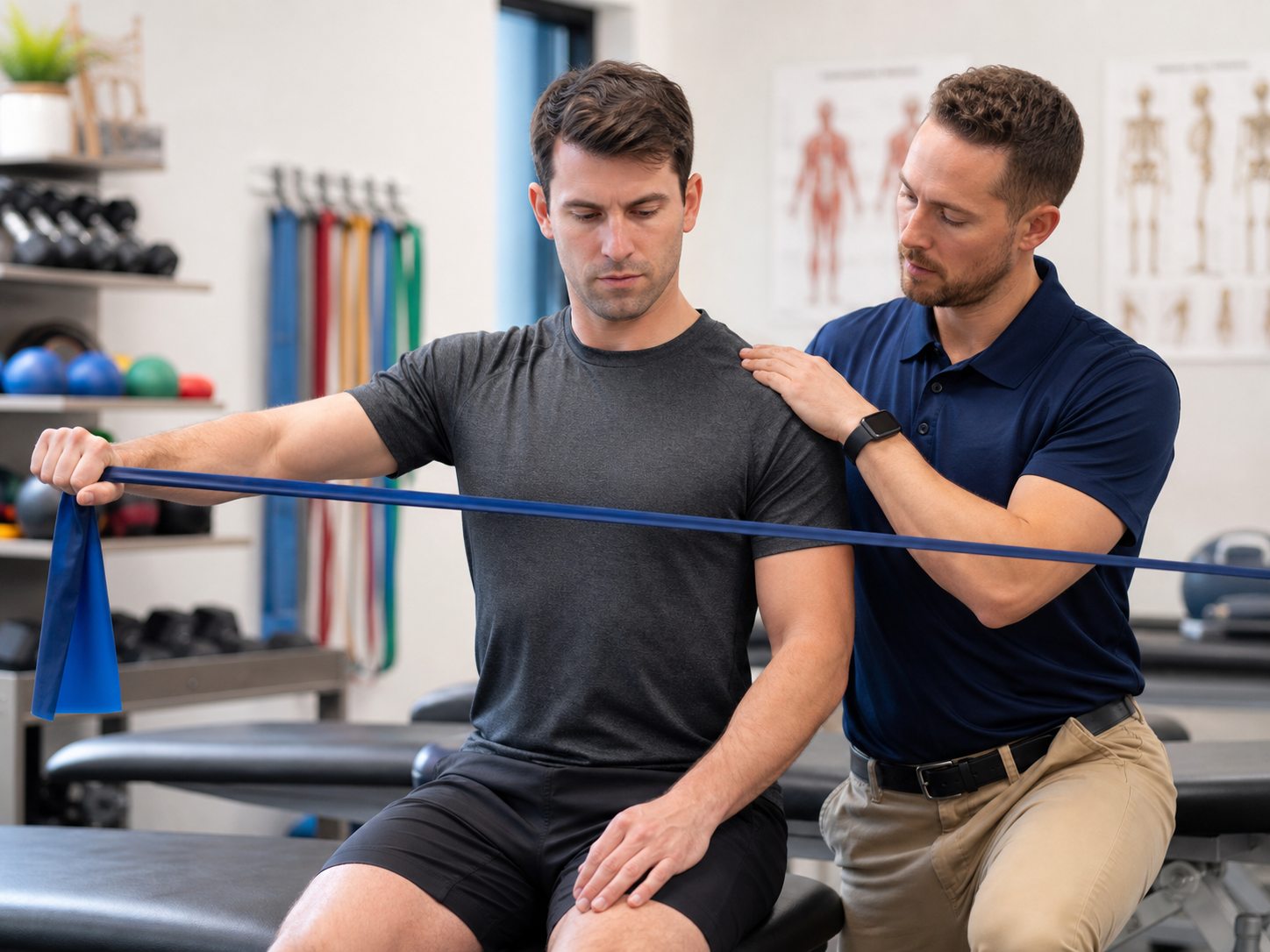
Sports and orthopedic rehab focuses on tissue capacity: how much load an injured joint, tendon, ligament, or muscle can tolerate today, and how to safely increase that capacity over time. Treatment progresses from symptom control and protected motion toward strength, proprioception, power, agility, and sport- or work-specific demands.
Clinical rationale
Ligaments, tendons, and muscles adapt to progressive loading. Underloading can leave a patient weak and guarded; overloading too soon can irritate symptoms. The plan must match the stage of healing.
Common PT interventions
- Strengthening, mobility, proprioception, and movement retraining.
- Return-to-running, return-to-sport, or return-to-work progressions.
- Education on recovery volume, soreness rules, footwear, and home exercises.
Balance and fall risk
Balance, fall risk assessment, gait, and confidence
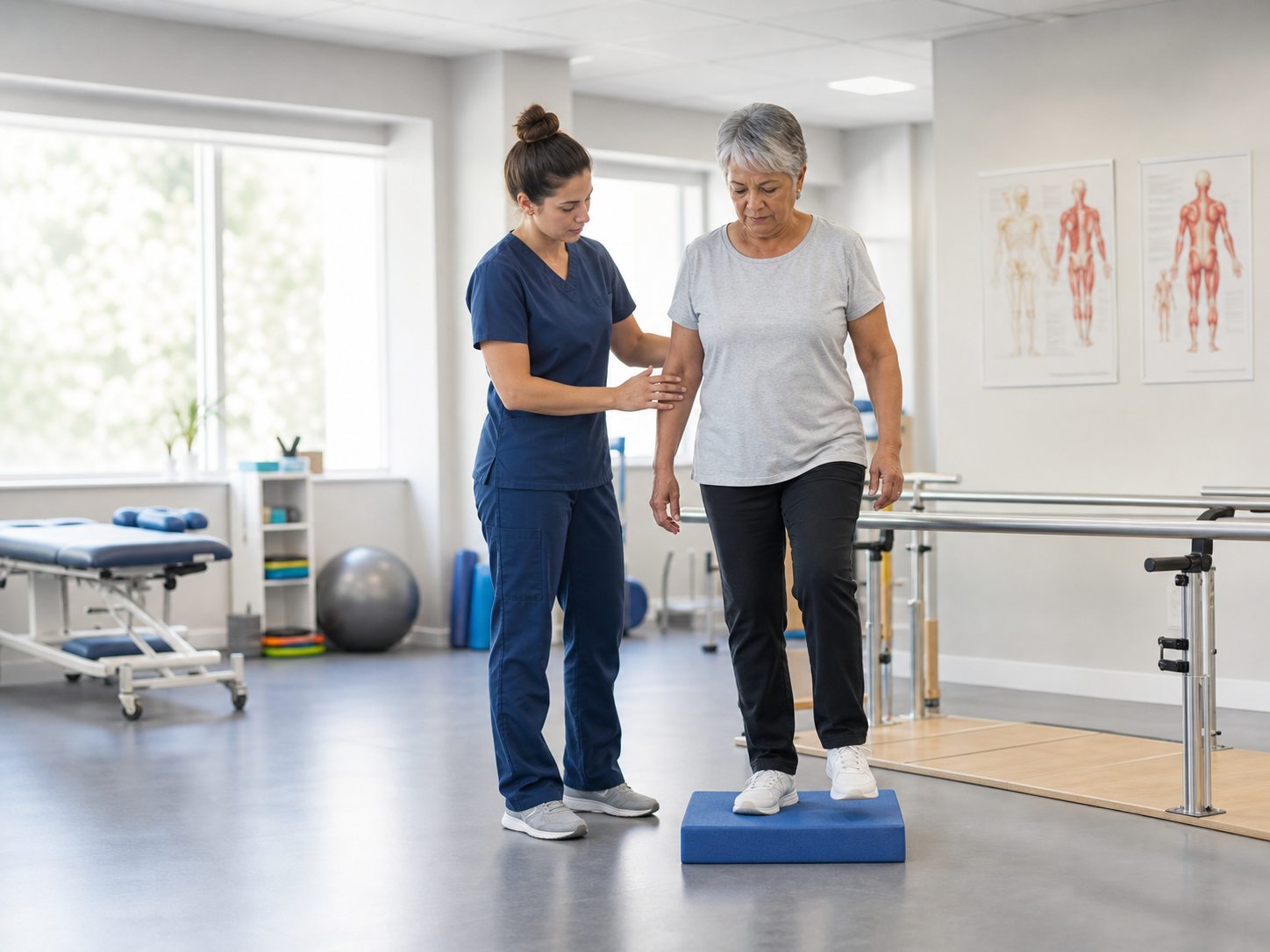
Balance depends on strength, reaction speed, vision, vestibular input, foot and ankle sensation, medications, cardiovascular tolerance, and confidence. Physical therapy can identify modifiable risk factors and build safer movement strategies for home and community mobility.
Clinical rationale
Fall prevention is strongest when screening, functional testing, targeted exercise, and environmental education work together rather than relying on a single exercise or device.
Common PT interventions
- Functional measures such as chair stand, balance stance, walking speed, or Timed Up and Go.
- Leg strengthening, stepping reactions, gait training, and dual-task balance work.
- Assistive device fitting, home safety discussion, and confidence-building progression.
Vestibular rehabilitation
Dizziness, vertigo, and BPPV
Dizziness care begins by identifying whether symptoms are positional, motion-provoked, related to visual movement, connected with balance loss, or associated with medical red flags that require referral. Benign paroxysmal positional vertigo, often called BPPV, is commonly treated with canalith repositioning techniques when testing indicates the appropriate canal and side.
Clinical rationale
The vestibular system helps coordinate gaze, posture, and spatial orientation. When it is irritated or underperforming, graded exposure, gaze stabilization, and balance retraining can improve tolerance to motion.
Common PT interventions
- Positional testing and canalith repositioning when BPPV is suspected and appropriate.
- Gaze stabilization, habituation, balance, and walking drills.
- Education on symptom pacing, fall risk, and when medical follow-up is needed.
Adjunct techniques
Manual therapy, dry needling, and cupping
Manual therapy, dry needling, and cupping are best understood as adjuncts: tools that may reduce pain sensitivity, improve short-term motion, or help a patient tolerate exercise more effectively. They are selected after an exam and paired with active rehabilitation so gains carry over into movement.
Clinical rationale
Hands-on care can influence joint motion, soft-tissue irritability, and nervous system sensitivity. The long-term goal remains improved function through progressive exercise, education, and self-management.
Common PT interventions
- Joint mobilization, soft-tissue mobilization, stretching, and movement retraining.
- Dry needling or cupping when clinically appropriate and discussed with the patient.
- Follow-up exercise to reinforce the motion or symptom change created in session.
Therapeutic exercise and conditioning
Strengthening, endurance, and cardiac rehab support
Therapeutic exercise is prescribed with clinical variables in mind: load, repetitions, range of motion, tempo, rest, symptom response, heart rate, blood pressure, perceived exertion, and recovery between sessions. For people rebuilding after illness, hospitalization, or cardiac events, the plan should respect medical precautions and progress gradually.
Clinical rationale
Muscle, tendon, bone, cardiovascular, and nervous system tissues adapt to repeated, appropriately dosed activity. Consistent progression can improve function while reducing the boom-and-bust cycle of doing too much too soon.
Common PT interventions
- Progressive strengthening, aerobic conditioning, mobility, and functional circuits.
- Vitals monitoring and intensity scaling when medically appropriate.
- Education on pacing, recovery, and home exercise consistency.
Hand, wrist, and nerve care
Carpal tunnel symptoms, wrist stiffness, and grip weakness
Hand and wrist symptoms are evaluated through sensation, grip, range of motion, nerve irritability, work tasks, sleep position, and repeated-use demands. Conservative therapy often focuses on reducing mechanical sensitivity while keeping the hand useful for daily tasks.
Clinical rationale
Nerves, tendons, and joints respond to position, compression, repetition, and load. Treatment aims to reduce aggravating inputs while restoring strength and mobility where deficits are present.
Common PT interventions
- Nerve and tendon gliding, wrist and hand strengthening, and mobility work.
- Ergonomic education for tools, keyboards, sleep, and repeated gripping.
- Coordination with medical providers when numbness, weakness, or symptoms progress.
Pediatric physical therapy
Pediatrics, youth sports, and age-appropriate movement
Pediatric care uses the same clinical reasoning as adult care, but it must fit the child's developmental stage, attention span, family routines, school demands, and sport or play goals. Treatment is designed to be measurable, safe, and understandable for both the child and caregiver.
Clinical rationale
Children and adolescents build strength, balance, coordination, and confidence through practice that is specific enough to matter and engaging enough to repeat.
Common PT interventions
- Strength, balance, coordination, gait, and sport-readiness activities.
- Caregiver education and home activities that fit the child's routine.
- Gradual return to school, play, sports, or post-surgical activity when appropriate.